Can dingoes help to manage introduced deer?
Investigating the diet of dingoes in Bunyip State Park to understand the potential contribution of dingoes to deer management.
Research Cluster
Healthy Country, Healthy Communities, Healthy People
Research partners
Bunurong Land Council, DEECA, Melbourne Water
Project team
Dr Joe Greet (Senior Research Fellow, SAFES), Dr Ami Bennett
Contact
Project summary
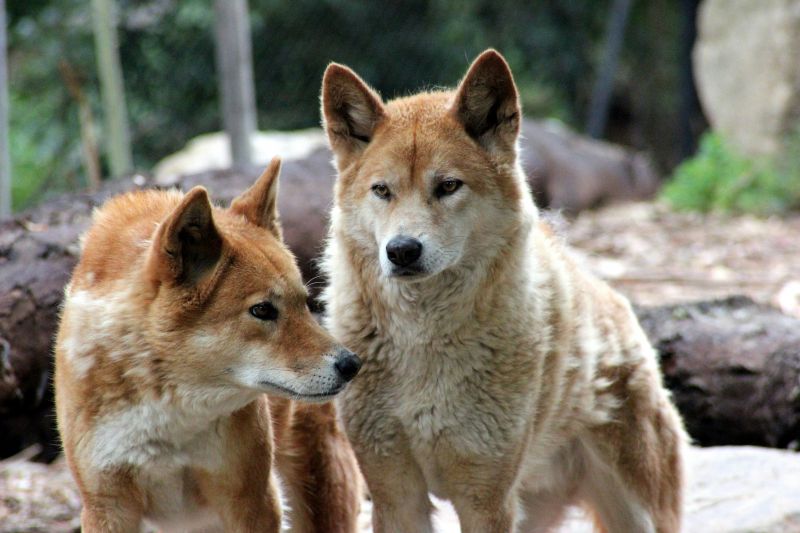
Introduced deer populations are increasing across Australia despite significant control efforts, causing damage to waterways, vegetation and biodiversity. The dingo is a threatened native apex predator of cultural significance to First Nations communities. In partnership with Bunurong Land Council, DEECA and Melbourne Water, this is investigating the diet of dingoes in Bunyip State Park to understand the potential contribution of dingoes to deer management.
What are we interested in?
Deer degrade waterways and damage vegetation, threatening native plant populations and impacting biodiversity and Country. Dingo populations are often subject to lethal control in areas with high deer densities. There is a critical need to understand whether dingoes can contribute to deer management, both directly through predation and indirectly by influencing deer behaviour.
The goals of our project
To investigate the frequency of deer in dingo diets in relation to deer abundance, and to build baseline data for a broader landscape-scale study of dingo-deer relations. The project supports Balirt Biik Rangers in building capacity to conduct ecological surveys and contribute to native and pest animal management on Bunurong Country.
Outcomes / activities
Field surveys for deer and dingo scats will be conducted with Bunurong Rangers, assisted by detection dogs, in Bunyip State Park. Dingo scats will be analysed using macroscopic and eDNA techniques. Research findings are communicated through community workshops and reports led by Balirt Biik Rangers.
Get in touch with the research team
- greetj@unimelb.edu.au