Building capacity and conserving Bogong moths (deberra)
The Bogong moth is central to a collaboration uniting Traditional Knowledge and Western science to protect a culturally and ecologically vital species.
Research Cluster
Research Partners
Victoria State Government, Taungurung Land and Waters Council, Western Sydney University
Project Team
Professor Brendan Wintle, Dr Melanie Wong
Contact
Project Summary
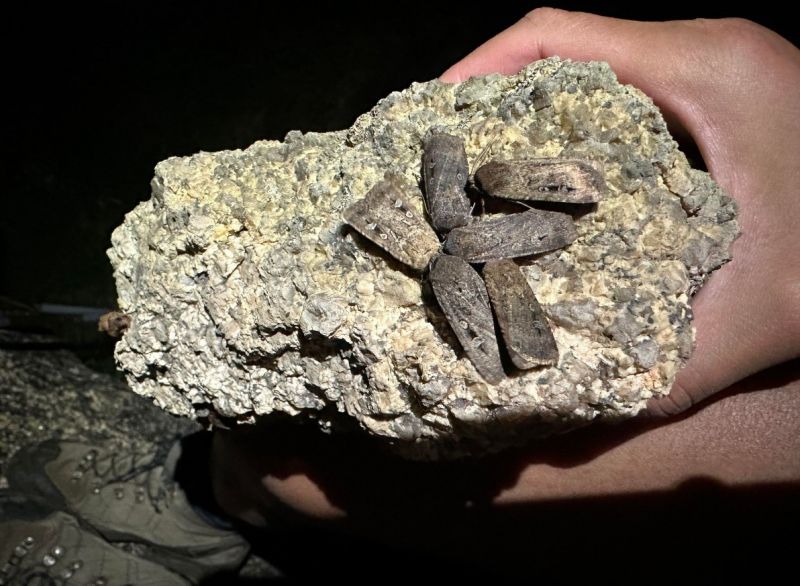
The Bogong moth, or deberra in Taungurung language, is widely known for its annual mass-migration to the Australian Alps. The Bogong moth is at the centre of an ambitious collaboration blending Traditional Knowledge and Western science. Together, researchers and First Nations partners are working to understand and protect this culturally and ecologically vital species. Moth abundance means alpine ecosystem abundance: deberra are a vital food source for the critically endangered Mountain Pygmy Possums. Deberra are also deeply culturally valuable to many First Nations Peoples.
Moth abundance means ecosystem abundance: deberra are a vital food source for the critically endangered Mountain Pygmy Possums. Deberra are also deeply culturally valuable to many First Nations Peoples.
In 2017 moth numbers crashed by 99.5% and subsequently has been listed by the International Union of Conservation Nature’s threatened species list as endangered. The MBI are working with a range of partners, in a collaborative effort to find out why. There are significant gaps in Western knowledge about where the moths breed, the natural fluctuations of the species, and the specific threats to their life cycle and survival.
What are we interested in?
Over the last five spring and summers, field researchers Melanie Wong (University of Melbourne) and Olivia Tunney (University of Melbourne) have monitored Bogong moth activity and populations across a range of sites and summits in Victoria’s high country. Ms Wong has worked alongside Taungurung Land and Waters Council partnering to monitor and explore various surveying methods across Taungurung sites.
Methods include a bucket-and-light method, and a newer camera-capture method. Taungurung cultural authorities have continued to monitor deberra and correlate cultural knowledge across Taungurung sites. This has supported our team to collaboratively collect data and deberra observations on Country. Our team has also collaborated with Gunaikurnai Land and Waters Aboriginal Corporation and the Nallawilli Traditional Owner Group; to enhance all parties’ capacity to make informed conservation decisions for the moths and improve the MBI data set.
The goals of our project
We know that at the heart of understanding the Bogong moth, are strong, equipped networks.
Alongside First Nations leadership, the MBI have collaborated with the North East Catchment Management Authority to select sites and share data and support Traditional Owner groups to continue monitoring initiatives.
Outcomes / activities
The project team has built a partnership with the University of Western Sydney, supporting the establishment of a multi-state 3 year monitoring program across Tasmania, NSW, Victoria and ACT. The team has also established a new pilot trial to assess Bogong moth breeding grounds using environmental DNA , which was presented at the Ecological Society of Australia conference in December 2024. Our Alps-wide monitoring program is only possible through the financial commitments of donors who connected with us through Australian Environmental Grant-makers Network [AEGN].