Researcher Spotlight - Dr Melissa Pineda Pinto
Overview
Dr Melissa Pineda Pinto, a McKenzie Postdoctoral Research Fellow at the Melbourne Centre for Cities, explores how urban biodiversity can be supported through multi-species justice, care and collaborative governance. Her current work spans the cities of San José, Costa Rica, and Melbourne, Australia, where she works closely with communities, governments, and researchers to reimagine novel ecosystems – human-altered landscapes such as vacant land, transport corridors, post-industrial sites, and unmanaged spaces – as sites of ecological and social care.
Prior to joining the University of Melbourne, Mel (as she is known to her colleagues) was a postdoctoral research fellow at Trinity College Dublin on the NovelEco project, where she used forecasting and co-design methodologies to better understand these emerging, marginal ecologies in cities. Her PhD explored the integration of nature-based solutions and ecological justice.
The MBI is fortunate to have Mel contributing across several clusters, including Healthy Country, Healthy Communities, Healthy People and Levers for Deep Change. She is also currently involved in two MBI funded ‘Awe and Wonder’ projects; one focused on urban nature and care for Country, and the other on transcendence and ecological care across cultures. Mel is also a co-investigator on an exciting project that seeks to challenge perceptions of darkness to enhance biodiversity in cities.
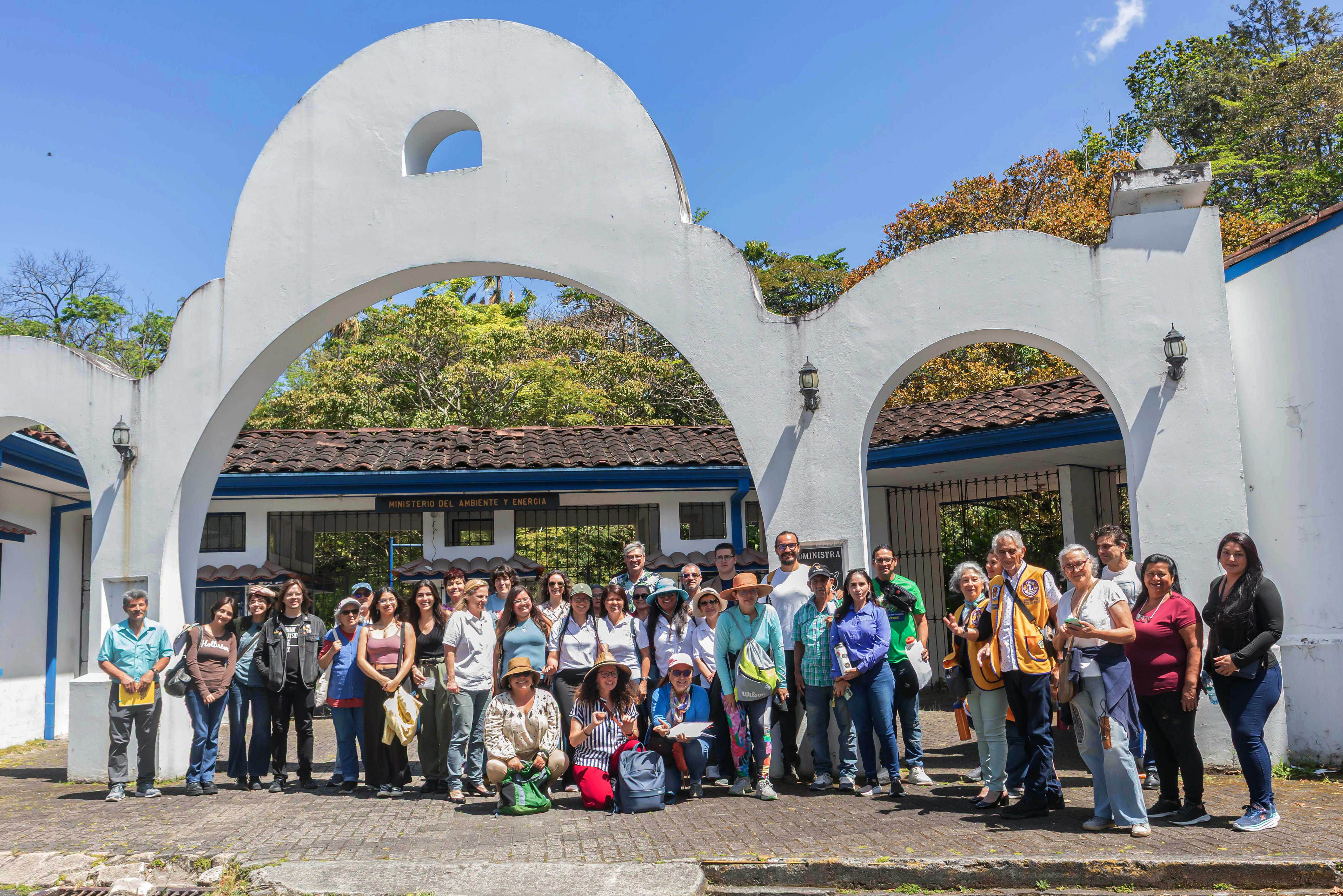
Image: One of the co-design workshops held in an abandoned zoo in the margins of Torres River, an urban waterway in San José, Costa Rica (February 2025).
Understanding biodiversity through multi-species justice
What happens when we extend ethical, political and social considerations beyond humans? Multi-species justice , central to Mel's research, does exactly that, emphasising that nonhuman communities have rights and capabilities.
When asked why justice is an important element when addressing biodiversity, Mel states:
Urban marginal spaces are often dismissed as empty or degraded, yet they can be vital sites of biodiversity and care. Multi-species justice helps us recognise the hidden ecological relationships that already exist within these spaces and find pathways for coexistence and shared responsibility.
Community engagement and partnerships
Community engagement is central to Mel’s work. Through co-design, participatory, and creative approaches, she has collaborated closely with communities and stakeholders to recognise the ecological and social value of urban marginal spaces. Her creative methods, spanning workshops, site visits, photography, and storytelling, have enabled participants to re-imagine urban so called “vacant” spaces as valuable , living ecological and social landscapes. These collaborations have also fostered the development of new alliances between community groups, public institutions and researchers, helping to reposition neglected urban spaces as important sites of biodiversity, social learning and environmental stewardship.
In San José, Costa Rica, Mel established a collaborative environmental governance platform bringing together local universities, the Municipality of San José, the Ministry of Environment, and multiple community and environmental organisations. This platform has enabled ongoing dialogue, knowledge exchange and collaboration around urban biodiversity, environmental stewardship and the governance of novel ecosystems in cities.
Mel’s research and expertise offer a compelling exploration of biodiversity, ecosystems, and the natural world, incorporating a justice orientated lens alongside broader ecological perspectives. Her work invites us to rethink not just how we protect nature, but who and what we include in that effort.
You can learn more about Mel and her work here.