Mia Turel
Nature-Based Coastal Protection
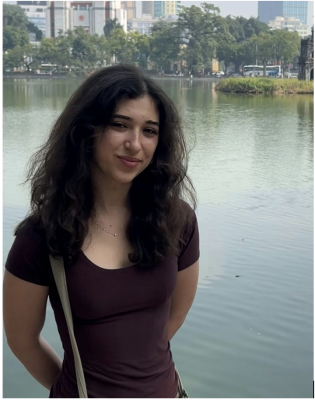
Mia Turel is a PhD candidate in the School of BioSciences at the University of Melbourne. She completed a Bachelor of Science at the University of Melbourne, majoring in Environmental Engineering. Through this degree, alongside elective coursework in ecology and marine biology, she developed an interest in nature-based solutions for protecting and restoring coastlines. For her master’s thesis, she worked with the Coastal and Estuarine Adaptation Lab in the School of BioSciences at the University of Melbourne. This thesis examined factors affecting the survival of the native flat oyster. She is continuing to work with the lab for her PhD, looking at the physical thresholds that limit the persistence and establishment of coastal habitats.
Contact:
Thesis
Learning from Nature to Optimise the Design of Nature-Based Coastal Protection
Natural and native habitats along our coastlines such as saltmarsh, mangroves, seagrass, and reefs are being replaced with hard engineered structures for coastal protection from erosion and flooding. Hard engineered structures (e.g., seawalls) support low biodiversity characterised by opportunistic and invasive species. There is an increasing interest in the use of nature-based solutions that restore, rehabilitate, or create coastal habitats for coastal protection. These solutions provide a suite of other benefits such as increased biodiversity and carbon sequestration. However, establishing coastal habitats where they have been lost or might be needed for coastal protection is challenging due to the change in physical processes that occur when these habitat formers aren’t there. Interdisciplinary research on these physical limitations are required to design successful nature-based solutions. Decision makers require technical guidance on the physical processes that affect ecology to scale nature-based solutions and decrease the extent of coastal hardening.
Supervisors
- Dr Rebecca Morris, Senior Lecturer in Ecology, School of BioSciences
- Professor Alexander Babanin, Department of Infrastructure Engineering, Faculty of Engineering and Information Technology
- Dr Rackel San Nicolas, Department of Infrastructure Engineering, Faculty of Engineering and Information Technology