Nazia Akram
Amphibian disease ecology
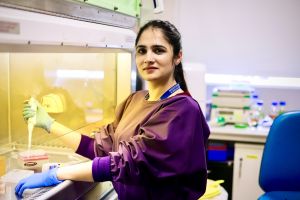
Nazia Akram is a PhD candidate researching amphibian disease ecology. Her work focuses on developing laboratory models to study infection dynamics of Batrachochytrium dendrobatidis. She uses cell culture, quantitative staining techniques, and antimicrobial peptide assays to examine host–pathogen interactions. Her research contributes to a broader understanding of chytridiomycosis relevant to amphibian conservation.
Contact:
Thesis
Quantifying Host–Pathogen Interactions Between Batrachochytrium dendrobatidis and Amphibian Skin Using In Vitro Infection Models
Chytridiomycosis, caused by Batrachochytrium dendrobatidis (Bd), remains a major driver of global amphibian declines. This thesis employs a Xenopus laevis A6 epithelial cell in vitro model to investigate Bd infection dynamics, strain-specific virulence, and host–pathogen interactions at the amphibian skin interface. Quantitative staining assays were developed to distinguish fungal growth stages and assess host cell viability, enabling comparative analyses across infection intensities. The antifungal efficacy and cytotoxicity of frog skin–derived antimicrobial compounds, including peptides and alkaloids, were evaluated to better understand chemical defence mechanisms. Together, this work advances experimental approaches for studying chytridiomycosis and informs conservation-focused antifungal strategies.